
The Daily Readee
Name
Date
Ocean Tides
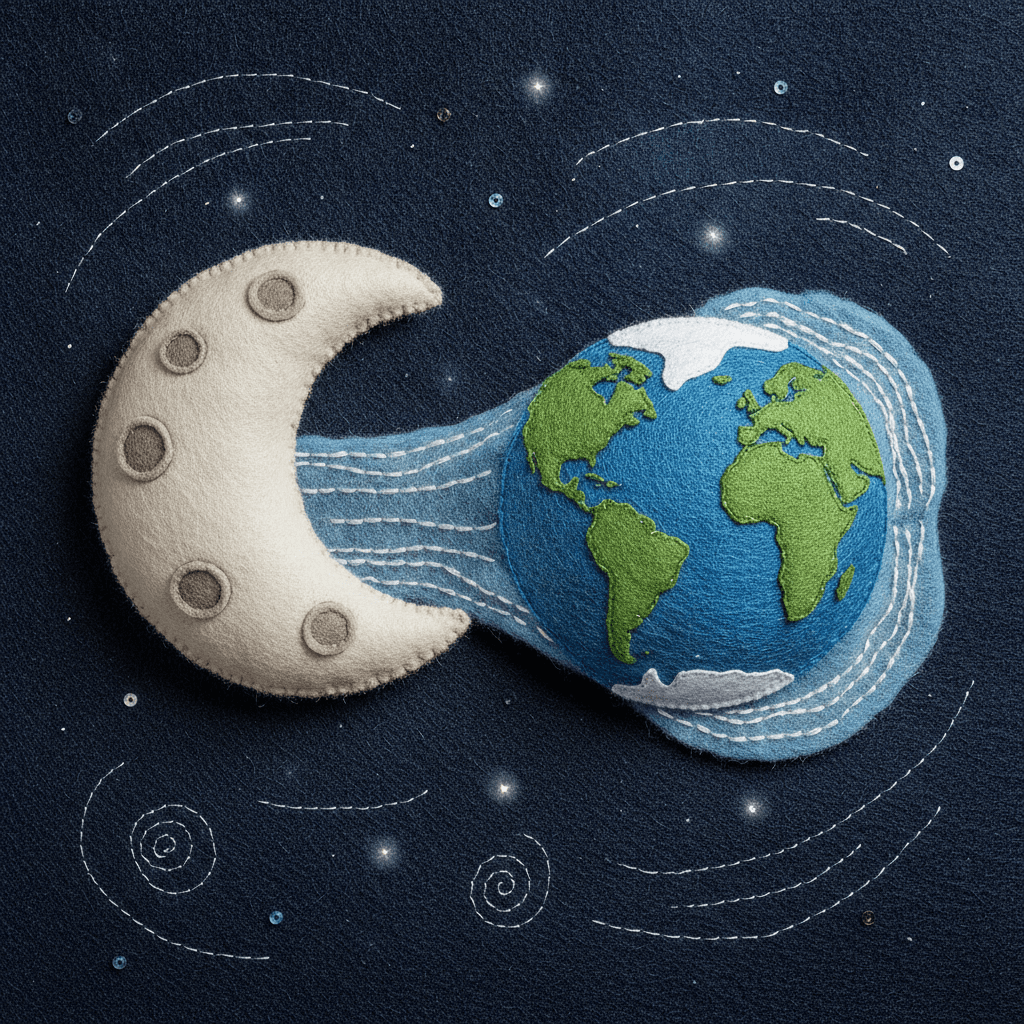
The Moon pulls on Earth. It has a force called gravity. This force pulls the water in the ocean. This pull makes the ocean water rise and fall each day. These are called tides.
When the Moon is right above a part of the ocean, its gravity pulls that water up. This makes a high tide. The water level gets higher.
On the other side of Earth, far from the Moon, there is also a high tide. The Moon pulls the whole Earth toward itself. It pulls the solid Earth more than the water on the far side. So, that water gets left behind a bit, and it bulges out too. This makes another high tide.
Between these two high tides, the water level goes down. These are called low tides. The ocean water rises and falls each day.
Questions
- 1.What is the most important idea the passage wants you to understand about ocean tides?
- Low tides are when the ocean water goes down.
- Tides happen every day because the Moon is always there.
- The Moon's gravity makes ocean water rise and fall.
- There can be two high tides at the same time on Earth.
- 2.If the Moon did not pull on Earth's oceans, what would most likely be different about the water level?
- The water would always be at a high tide.
- The water would only rise, but not fall.
- The water would sometimes be high and sometimes low.
- The water would not rise and fall each day.
- 3.The passage says water on the far side of Earth gets "left behind a bit." What does this tell us about the water there?
- The water does not move as much toward the Moon as the Earth does.
- The water is pushed away from the Moon.
- The water is pulled harder than the solid Earth.
- The water moves faster than the solid Earth.